Maximizing holiday production efficiency on food packaging lines starts with eliminating bottlenecks at changeovers, sanitation, and unplanned downtime. With many plants seeing 20–50% higher demand in November and December for items like dips, deli salads, hummus, snacks, and ready-to-eat meals in trays and cups, any lost hour on the line can translate into missed truck slots, penalties, and lost shelf space. This post walks through five practical upgrades that help food manufacturers run more product through existing lines while staying compliant, sanitary, and on schedule.
Maximizing Holiday Food Packaging Efficiency
December is peak season for many food manufacturers, with holiday orders driving surges in demand for rigid containers such as cups, tubs, and trays with a film seal. When packaging lines cannot keep up—because of slow changeovers, bottlenecks at denesting or coding, or unplanned downtime—plants risk missed shipments, retailer penalties, and long-term loss of shelf space.
Instead of rushing to add an entirely new line, many mid-sized processors can unlock extra capacity by optimizing existing rotary filling, inline sealing, and tray sealing systems. Strategic upgrades that focus on changeover speed, line integration, sanitation, and preventive maintenance can help you run more units per shift and stay on top of holiday promotions.
Why Holiday Packaging Lines Struggle to Keep Up
Holiday programs often compress months of volume into a few intense weeks. Multiple SKUs, private-label runs, and club-store packs introduce more frequent changeovers, more complex scheduling, and higher pressure on every piece of packaging equipment.
Rigid containers depend heavily on rotary fillers, inline sealers, and tray sealers that may already be near capacity in normal months. When these machines are slowed by manual loading, dated tooling, or fragmented ancillary equipment, the entire plant feels the impact in overtime and missed opportunities.
Upgrade Tray Sealing Changeovers for Faster Holiday Format Switches
During the holidays, it is common to run several different tray or cup sizes in a single day: standard portions, family-size trays, and promotional multipacks. On older tray sealers, changing over carriers and tooling for each format can consume 30–60 minutes, especially when components are heavy, awkward, or require tools and multiple adjustments.
Upgrading to quick-change carriers and tooling on tray sealers turns changeovers into a fast, repeatable process. Well-designed quick-change carriers typically feature:
- Lightweight frames that one operator can handle safely.
- Positive locating features—pins, guides, and stops—that position the carrier without manual alignment.
- Minimal loose hardware, often with hand knobs or captive fasteners to lock everything into place quickly.
Supporting these upgrades with clear visual work instructions or diagrams helps seasonal and cross-trained staff complete changeovers consistently. Standardizing the process also reduces the risk of misalignment, damaged tooling, and product or film waste during busy holiday runs.
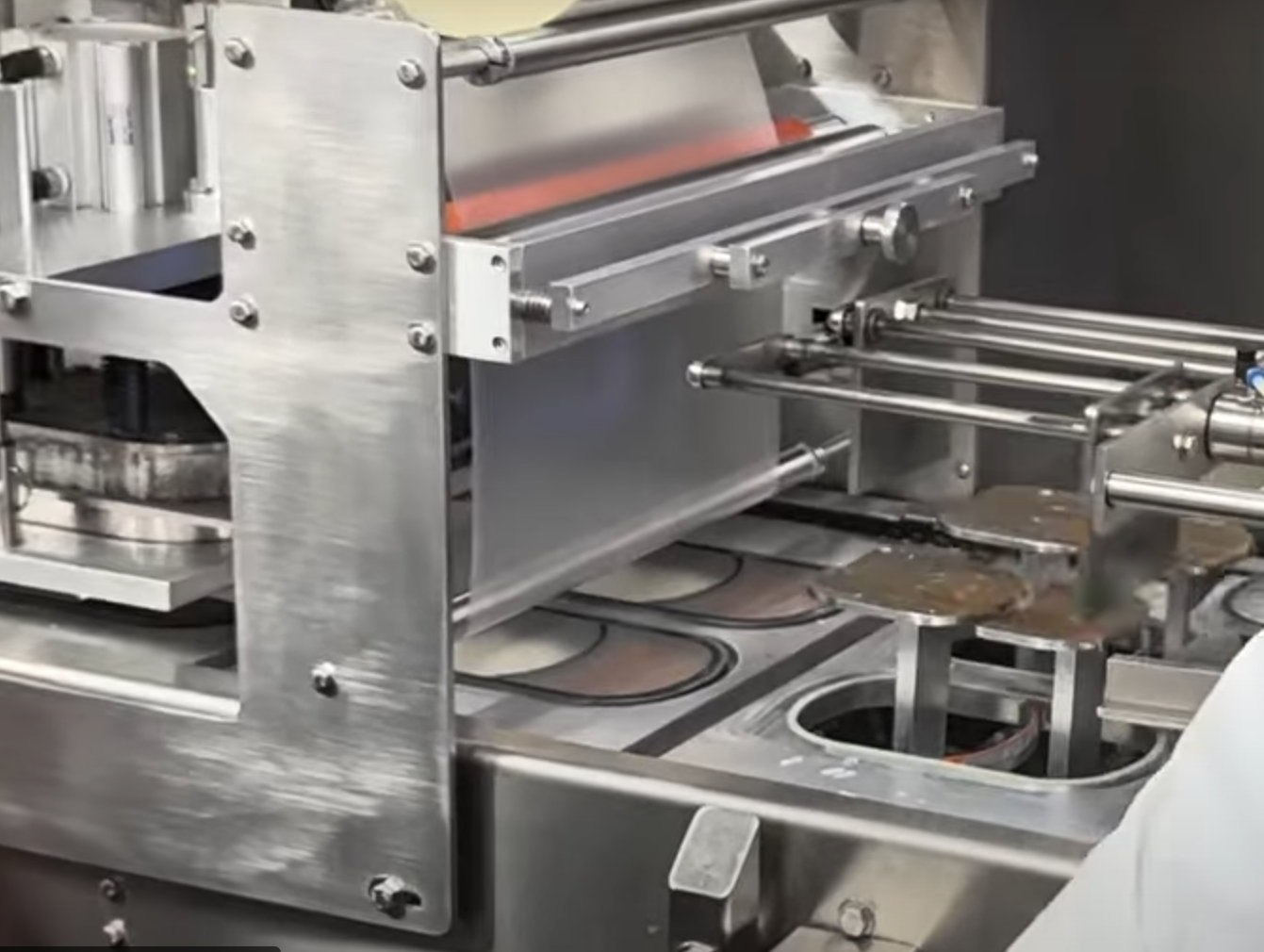
Integrate Denesters and Coders to Streamline Holiday Runs
At high volumes, manual cup or tray loading is a major source of lost throughput. Even a well-trained team can struggle to keep pace with a rotary filler or inline tray sealer when every carrier or pocket must be hand loaded.
Adding automatic denesters to drop cups or trays directly into the carriers keeps product flow steady and aligned with the machine’s speed and indexing pattern. Denester modules can be integrated with rotary and inline systems and tailored to your specific container sizes and materials.
Date coding is another common bottleneck when handled offline or on separate equipment. By integrating coders into the main line, you can apply date and lot codes in sync with sealing, reducing rework, handling, and compliance risk. An optimized cell often links denester, filler, sealer, coder, conveyors, and accumulation tables in a single, smooth workflow.

Design Washdown-Friendly Equipment for High-Shift Holiday Schedules
More shifts and longer run times in November and December increase the importance of robust sanitation and washdown. Frequent product and allergen changes—from dairy-based dips to plant-based spreads, for example—require documented, repeatable cleaning procedures that do not consume half a shift.
Equipment designed with stainless steel construction and sanitary features simplifies cleaning and helps meet or exceed regulatory expectations. For holiday readiness, plants should prioritize:
- Stainless frames and guards that withstand frequent washdown and exposure to sanitizers.
- Smooth, sloped, easy-to-drain surfaces to prevent standing water and product buildup.
- Tool-less or quick-release guards that allow fast access to belts, carriers, and product-contact areas.
Pairing these design features with a tailored washdown protocol—clearly defining what must be cleaned between shifts versus between products—helps maintain food safety while protecting uptime. Posting a concise, visual “holiday washdown checklist” near the equipment keeps expectations clear for full-time and seasonal crews.
Use Predictive Maintenance to Protect Rotary Filling Capacity
Rotary fillers are often the heartbeat of rigid packaging operations, and an unexpected failure during peak season can derail an entire schedule. When maintenance is purely reactive, issues like worn seals, misaligned tooling, or degraded bearings tend to surface at the worst possible time.
Implementing a simple, predictive maintenance checklist for each rotary filler helps catch problems before they cause unplanned downtime. A practical structure might include:
- Daily checks: Visual inspection for leaks, unusual noise, or vibration; confirmation that guards and safety interlocks function correctly; quick cleaning of sensors and photo-eyes.
- Weekly checks: Lubrication per the machine’s schedule; inspection of seals, gaskets, and vacuum components; verification of torque and condition on change parts and fasteners.
- Pre-holiday review: Ensuring critical wear parts—belts, chains, seals, nozzles—are in stock before demand spikes.
Clear, visual maintenance guides help operators and technicians stay aligned, especially when the plant is running extended hours. Combined with modern controls that support efficient troubleshooting, this approach can significantly reduce the risk of holiday-season breakdowns.
Targeted Upgrades to Unlock More Holiday Capacity
Many mid-sized refrigerated and ready-meal producers run packaging lines that are mechanically sound but not fully optimized for today’s holiday demand patterns. Bottlenecks such as slow tray changeovers, manual denesting, and last-minute maintenance become more costly when every truck slot and promotional window matters.
By upgrading existing rotary filling, inline sealing, and tray sealing lines with quick-change carriers, integrated denesters, inline date coders, and line-specific maintenance and sanitation checklists, processors can often gain meaningful throughput and reduce unplanned stops. In many cases, these focused improvements deliver better return on investment than a full line replacement while still providing the extra holiday capacity needed.
Talk With Rocket Machine Works About Your Holiday Packaging Strategy
If you are planning for higher holiday volumes on cups, trays, and other rigid containers with a film seal, now is the time to evaluate your packaging line. A conversation with Rocket Machine Works can help you identify where upgrades to rotary fillers, inline sealers, tray sealers, or ancillary equipment will have the biggest impact on efficiency and uptime.
Reach out through the Rocket Machine Works contact page and share a brief overview of your products, container sizes, and production goals. From there, the team can recommend whether quick-change tooling, denesters, date coders, conveyors, accumulation tables, or custom-built machinery are the right next steps to get your packaging lines holiday-ready.